★4.9 Google rated 🎵
100+ reviews from our local Gahanna families 🎵
Serving the Gahanna community since 2010 🎵
Unlimited makeups* 🎵
Change your schedule at any time 🎵
Simple, transparent pricing 🎵
Family discounts 🎵
Neurodiversity-affirming music lessons 🎵
Two-teacher model: Music Lab + instrument 🎵
Unlimited adult Music Lab time 🎵
Year-round performance opportunities 🎵
Annual benefit concert for local food pantry 🎵
Conveniently located near Hamilton & Morse 🎵
Book a 4-week trial today!
Rock band is a class that involves all different types of people who play all different types of instruments. I play the drums and sometimes sing, for a youth rock band called “Rocket Trash”.
The overall experience is really exciting, and even if you’re drained of energy, rock band will just overflow you with energy. Another fun thing about the rock band class is if you want to play other instruments, you can. Most times we can get pretty silly, but one thing leads to another and we’re back on track again.
So far there is Nick, Hasit, and Advait, who are all boys, and there is me, Lauren, and I’m the only girl, which can still be fun at times. Right now we are working on a song by Taylor Swift called “Ready For It” and “Eye of the Tiger” by Survivor.
I have been in rock band for four years, and so far my overall experience is that I wouldn’t be the same without it. We have loads of fun here in rock band class, so why don’t you join us?
Is your child getting nervous about performing? Here’s some of our tips to make recitals seem a little less scary!
Have a practice recital at home! Move some chairs around and have the rest of the family listen to your student perform their piece. Think of it as a real performance! You can even Facetime Grandma for a bigger audience.
Practice the song in the clothes (or costume!) you will wear. It can be a little scary to break out your new shoes on the day of the recital. Make sure you feel comfortable moving around, your shoes don’t slip on the piano pedals, and can take a bow at the end of your song without tripping!
Practice with distractions. Performing live means there is always room for distractions. Maybe a baby starts crying or the door opens. If your student can practice while a sibling is playing video games and Mom is making dinner, it shows them that they can handle distractions!
Watch a YouTube video of someone playing the same song. Getting the song in your ear can help you perform it better. It also helps the student subconsciously memorize the song, which will boost their playing confidence onstage!
Encourage them. At MTMS, our recitals are very laid back and inclusive. Students of all ability levels participate and there is always thunderous applause at the end of each song. They will always have the chance to start the song over if they begin on a wrong note, and their teacher will help them prepare “backstage” before it starts.
Practice, practice, practice! Tried and true, the way to perfect your performance is to practice, practice, practice! Make sure to practice a little bit every day and soon you’ll know that song like the back of your hand.
We’re looking forward to all of your excellent performances at the Halloween Recitals this year! Reminder, recitals are Saturday, October 20th at Polaris and Sunday, October 21st at Gahanna!
Happy October, friends! My favorite month of the entire year is finally here. On top of the beautiful Fall season transitions, October is a very special month in my home state for music therapists. Every year, the Association of Ohio Music Therapists recognizes October as Music Therapy Month! I love having this available as a chance to highlight the profession, advocate for what we do, and celebrate accomplishments and advancements in the Ohio music therapy world.
When I tell people I went to college to become a music therapist, I typically get a lot of questions. As a passionate supporter of advocacy (and just an overall music therapy nerd), I LOVE these responses. I am always happy to discuss and inform! So in honor of Music Therapy Month, I am going to share answers to some of the questions and responses I receive most. Please know that for many answers, I am directly referencing from the American Music Therapy Association website. Check it out for more information, the site is a fantastic resource (and fun to browse!)- http://www.musictherapy.org
“So what exactly is music therapy?”- According to the American Music Therapy Association, music therapy is defined as “the clinical and evidence-based use of music interventions to accomplish individualized goals within a therapeutic relationship by a credentialed professional who has completed an approved music therapy program.”
“What does a music therapist do?”- Just like other credentialed professionals in the field of healthcare, music therapists assess the well-being of clients; However, they assess through musical responses. Music therapists assess clients in a variety of areas, including “emotional well-being, physical health, social functioning, communication abilities, cognitive skills,” etc. Each session is uniquely tailored for individuals and groups based on their overall needs, and music therapists use many different intervention approaches to assess, plan, treat, and re-evaluate. Among these interventions are music improvisation, songwriting, lyric analysis, receptive music listening, music performance, music and movement, music assisted relaxation, and more. “Through musical involvement in the therapeutic context, clients’ abilities are strengthened and transferred to other areas of their lives.”
“Is it a newer profession?”- Music therapy has actually been around for a decent amount of time! You can find writings dating back to Aristotle and Plato explaining music to be “a healing influence which could affect health and behavior.” It wasn’t until after WWI and WWII, however, when medical professionals began to realize the effect music had on their patients. Veterans experiencing emotional and physical trauma from the war were presenting significant positive responses when the musicians came. Demand continued to grow for more training, and the first collegiate curriculum for music therapy was established in 1944 at Michigan State University.
“Who do you work with?”- I always like to say that music therapy can potentially make a difference from birth to death! Scratching the surface, here are some of the populations that music therapists work with:
Children, adolescents, adults, and elderly with mental health needs
Developmental and learning disabilities
Alzheimer’s disease and other aging related conditions
Substance abuse problems
Traumatic brain injuries
Physical disabilities
Acute and chronic pain
Mothers in labor
Veterans
Etc, etc, etc.
“Where can you work?”- Going off of that, there are a variety of settings you can find a music therapist in:
Psychiatric hospitals
Rehabilitative facilities
Medical hospitals (childbirth, NICU, pediatric, ICU, oncology, surgery, etc.)
Outpatient clinics
Day care treatment centers
Agencies serving persons with developmental disabilities
Community mental health centers
Drug and alcohol programs
Senior centers
Nursing homes
Hospice and palliative programs
Correctional facilities
Halfway houses
Schools
Private practice
Etc, etc, etc.
“I saw music therapy on the iPod documentary.”- The Music and Memory℠ program does a fantastic job in revealing the powerful effects of music with older adults; However, it does not represent clinical music therapy. The iPods provide residents with music they enjoy, but music listening does not replace the work of a credentialed music therapist. They are trained to use music to meet clinical, non-musical goals with clients (such as enhancing communication, increasing socialization, reducing depression and agitation, decreasing pain perception, exercising remaining mental capabilities, enhancing quality of life, and more). These personalized goals cannot be met effectively through music listening without further intervention. This same principle applies to volunteers playing music at the bedside or in the lobby. Ultimately, I believe that collaboration between MT andM&M allows us to better serve clients as a whole! Positive partnering is key to helping music impact more lives.
“How many colleges offer a music therapy degree?”- Currently on the American Music Therapy Association website, there are 81 universities that have an AMTA-approved music therapy program.
“What all do you have to do to become a music therapist?”- “Those who wish to become music therapists must earn a bachelor’s degree or higher in music therapy from an American Music Therapy Association (AMTA) approved program and have at minimum the entry level credential, MT-BC to ethically practice as a music therapist. The curriculum includes coursework in music, music therapy, biology, psychology, social and behavioral sciences, and general studies. Clinical skills are developed through 1200 hours of required fieldwork, including an internship in healthcare and/or education facilities. These experiences allow students to learn how to assess the needs of clients, develop and implement treatment plans, and evaluate and document clinical changes. Once the music therapy degree is earned and internship is completed, the student is eligible to sit for a board certification exam to earn the entry level credential, MT-BC, (music therapist, board certified) from the credentialing body, the Certification Board for Music Therapists. To maintain this credential, music therapists must demonstrate continued competence by completing 100 recertification credits within each five-year recertification cycle.”
“What goals do you address in Hospice music therapy?”- I get this question often because it pertains to the population I am working with. Each client that I assess and plan for is going to be different, so not everyone is going to have the same exact goals. However, there may be similarities. Here is a compiled list of some goals I might address with clients in my chosen population:
To continue Classical Music Month, here’s another awesome composer!
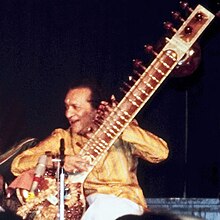
Meet Ravi Shankar – an Indian composer of Hindustani classical music. Shankar is known for his use of the sitar in his compositions, and using different rhythms to create a style different from other composers. Not only was Shankar a composer, but he was a gifted sitar player as well. He once collaborated with George Harrison of The Beatles, which inspired Harrison to record part of the song Norwegian Wood on sitar! Shankar passed away in 2012 but his legacy lives on in Indian and Western music alike.
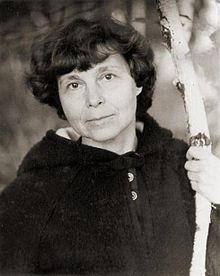
Sofia Gubaidulina was born in the Soviet Union, and she loved music even from a young age. She associated music with spirituality and some of her music is considered abstract. She used the musical technique of improvisation (meaning making up music on the spot) and sometimes she uses unconventional combinations of instruments, like a saxophone quartet! Gubaidulina is renowed across the world, and last year she received an Honorary Doctor of Music Degree from the New England Conservatory!