
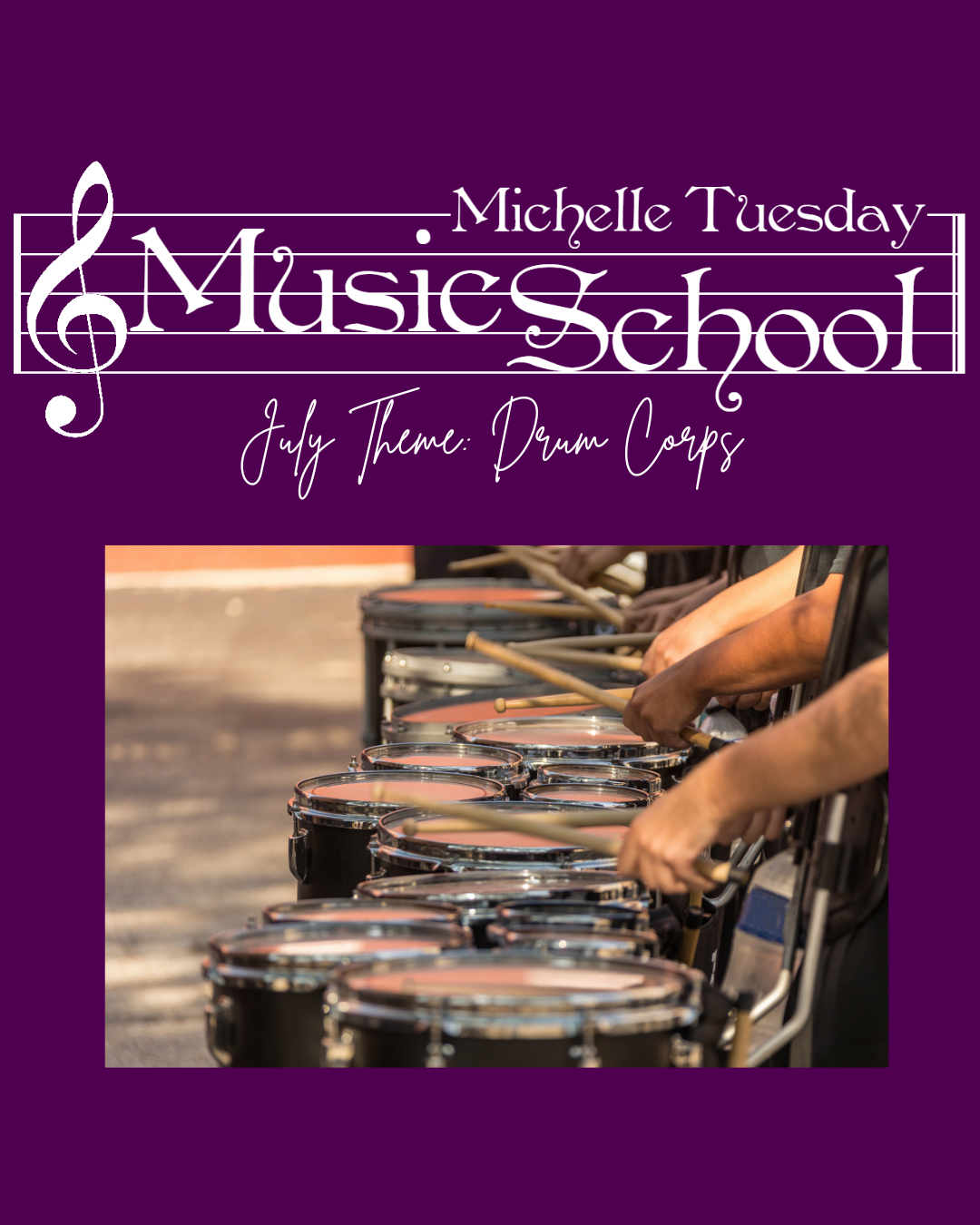
Whether you’re hearing the thunder of a bass drum line, the intricate movement of tenor drums, or the unmistakable crack of a well-tuned snare, drum lines bring unmatched energy and precision to any performance. This month’s theme explores several key aspects of percussion writing and performance, from arranging for different sections of the battery to understanding the unique sound of percussion-only drum corps ensembles.
Writing for the Tenor Line
Tenor drums, often called quads or quints, provide one of the most melodic voices within the battery. Unlike the snare drum, tenor players perform across multiple drums, allowing composers to create sweeping patterns, melodic contours, and visually exciting stick movements.
When writing for tenors, think beyond simple rhythmic accompaniment. Effective parts use the different drum sizes to create tonal contrast while maintaining comfortable sticking patterns. Smooth movement around the drums not only sounds cleaner but also allows performers to execute passages with greater accuracy and confidence.
Balance technical difficulty with musical purpose. Every phrase should contribute to the overall sound of the ensemble while remaining practical for performers to play consistently during rehearsals and performances.
Building a Strong Bass Drum Line
The bass drum section serves as the rhythmic and tonal foundation of the drum line. Rather than every player performing identical rhythms, modern bass lines often divide rhythms among multiple drums. This “split part” approach creates a full rhythmic texture while highlighting each player’s contribution to the ensemble.
Successful bass drum writing considers:
- Natural hand movement and sticking.
- Logical note distribution between players.
- Consistent timing across the section.
- The tonal relationship between the different-sized drums.
When written effectively, the bass line becomes much more than a source of low-end power. It becomes a highly coordinated instrument that supports every section of the ensemble while adding its own musical character.
Tuning the Snare Drum
A great snare sound begins long before the first rehearsal. Proper tuning affects articulation, projection, and the overall character of the drum line.
Start by evenly tensioning the batter head to produce a consistent pitch around the drum. Then adjust the bottom, or snare-side, head to achieve the desired snare response. Finally, fine-tune the snare wires so they provide a crisp sound without excessive buzz.
The ideal tuning depends on the style of music. A marching ensemble may favor a bright, articulate sound with higher tension, while an indoor or concert setting may call for a warmer, more controlled tone. Regardless of the style, consistency across every snare drum helps create a unified sound.
The Power of a Drum Corps Ensemble
One of the most exciting percussion formats is a drum corps-style ensemble made up almost entirely of percussion instruments. These groups demonstrate that rhythm alone can create compelling and expressive musical performances.
A typical percussion ensemble of this style combines:
- Snare drums for precision and articulation.
- Tenor drums for melodic movement and texture.
- Bass drums for depth and rhythmic foundation.
- A front ensemble (pit) featuring marimba, xylophone, and timpani to provide harmonic color, melodic content, and expanded musical expression.
Without brass or woodwinds, every musical idea must come from the percussion section. Dynamics, phrasing, timbre, and rhythmic interplay become the primary storytelling tools. The result is a performance that is both visually engaging and musically rich, showcasing the incredible versatility of percussion.
Just as important as musical ability is the discipline required to perform as one unit. Every member of the drum corps must stay in step, maintain a steady beat, and match the timing and movement of the entire line. A single performer who falls out of step or rushes the tempo can affect the precision of the entire ensemble. The heartbeat of the group depends on every player moving and performing together.
Beyond technical precision, drum corps performances are designed to entertain. Players often incorporate visual flourishes, including stick tricks, spins, crossovers, body movements, and choreographed gestures, to engage the audience while maintaining musical accuracy. These visual elements, combined with synchronized marching and powerful percussion, create the electrifying performances that have made drum corps a favorite among audiences for generations.
Bringing It All Together
Writing for a drum line is both an art and a science. Each section has its own role, technique, and musical voice, yet every performer contributes to a single, unified sound. Understanding how to write effectively for tenor and bass drums, learning the fundamentals of snare tuning, and appreciating the precision required in a drum corps ensemble all contribute to stronger performances and more engaging compositions.
Whether you’re a student learning your first cadence, a composer arranging for marching percussion, or an educator developing young musicians, exploring these concepts will deepen your appreciation for the craftsmanship behind every great drum line. Every beat, every tuning adjustment, every synchronized step, and every visual flourish contributes to the powerful performance that keeps audiences engaged from the first note to the final cadence.